If you’ve ever held a titanium disc in your hand—whether it’s for an industrial component, a medical implant blank, a high-performance aerospace part, or even a precision electronics spacer—you know it’s not just another metal. It’s light, strong, corrosion-resistant, and reliable, qualities that make it the go-to choice for industries where failure isn’t an option. But as someone who’s been supplying custom titanium discs for 12 years now, I’ve gotten more questions lately than ever before from clients, engineers, and even sustainability teams: What’s the real environmental cost of making these thin, versatile pieces? It’s not just “good for strength” or “bad for something else”—there’s a lot of nuance, and I’ve spent years deep in our supply chain to understand it firsthand. Let’s break this down, because if you’re choosing a titanium disc for your next project, the environmental impact should matter as much as its material specs. Titanium Disc

First, let’s start at the very beginning: titanium doesn’t just come out of the ground ready to be pressed into a disc. It’s mined from ores, most commonly ilmenite or rutile, which are usually found in placer deposits (sand or sediment deposits) or hard rock formations. Mining titanium ore has its own set of environmental tradeoffs, and it’s important to separate what’s specific to titanium mining from other metal mining. Unlike iron ore, which is widely mined with relatively low environmental intensity, titanium ore is rarely high-purity. Most ilmenite ore is only 50–60% titanium dioxide (TiO₂), while rutile runs around 95%—so you have to process a lot of raw material to get a small amount of usable titanium concentrate. I once had a mining engineer tell me that for every ton of titanium sponge (the intermediate product we use to make our discs), you end up moving and processing roughly 15 tons of ore. That’s a big number, and it’s why mining’s footprint is the first place people criticize titanium production.
The biggest mining-related impacts are land disturbance and chemical use. Placer mining, which is common for titanium in places like Australia, South Africa, and parts of the U.S., involves dredging riverbeds or stripping topsoil from coastal areas to extract heavy mineral sands. This can disrupt aquatic ecosystems, destroy habitats for species like turtles or fish, and lead to soil erosion if not properly reclaimed. Hard rock mining, used in places like Canada and Norway, creates underground tunnels and waste rock piles (tailings) that can leach heavy metals if not contained. That said, modern mining operations for titanium are getting better at reclamation. Many Australian placer mines, for example, restore riverbeds and vegetation after extraction, often working with local conservation groups to return land to its original state. I’ve visited a few of these mines on supplier visits, and it’s not the messy, unregulated operation you might see in old documentaries; they use suction dredges that minimize water disruption and rehabilitate 90% of the land they take out of use.
But mining is just step one. The next process is where titanium gets really energy-intensive: the production of titanium sponge, the raw material we melt and form into discs. There’s no way around it—titanium has an extremely high melting point (around 1,668°C, nearly 300°C higher than steel) and is highly reactive with oxygen and nitrogen at high temperatures, so you can’t just smelt it in an open furnace like iron. Instead, producers use the Kroll process, the dominant method for making titanium sponge for over 80 years, which involves several energy-heavy steps: first, converting TiO₂ ore into titanium tetrachloride (TiCl₄) through chlorination, then reacting TiCl₄ with magnesium metal in a vacuum furnace to produce pure titanium sponge and magnesium chloride.
This is where most of the environmental criticism of titanium production comes from. The Kroll process is energy-heavy, usually running on fossil fuels, and it generates waste products like magnesium chloride and spent chlorides that require careful disposal. A 2022 study from the International Titanium Association found that the carbon footprint of titanium sponge production ranges from 12 to 20 metric tons of CO₂ per metric ton of sponge—compare that to steel, which is about 1.8 tons of CO₂ per ton, and aluminum, around 16 tons per ton. That’s a stark difference, and it’s why for years, people wrote off titanium as a high-carbon metal.
But here’s the part that most people miss: not all titanium production is the same, and we’ve made huge strides in reducing the impact over the last decade. First, many modern sponge producers are shifting to renewable energy. Our primary sponge supplier, for example, runs their furnaces on hydroelectric power from the Canadian Rockies, cutting their carbon footprint by more than 40% since 2015. They’ve also updated their Kroll process to recycle 70% of the magnesium used in the reaction, reducing both waste and the need for new magnesium mining. The magnesium chloride byproduct isn’t just thrown away either—it’s processed into magnesium for other industries, creating a closed-loop system that minimizes waste.
Once we have titanium sponge, that’s where our part of the process comes in: turning it into discs. Our manufacturing facility focuses exclusively on precision cutting and forming titanium, so our impact is different from mining or primary production. We start by melting the sponge into ingots, then hot-rolling those ingots into sheets, then cold-working the sheets to get the exact thickness and hardness required for each disc. For our custom clients, we also machine, polish, or finish the discs to specific tolerances.
The environmental impact here is mostly energy for melting and machining, plus waste from scrap material. Titanium is notoriously hard to machine, so cutting it generates a lot of metal swarf (shavings), but the good news is that nearly all of that swarf is recyclable. We send 98% of our titanium scrap back to our sponge supplier, where it’s remelted into new ingots—no quality loss, just reuse of material that would otherwise go to landfill. That closed-loop recycling is a game-changer. If our clients hadn’t asked for more sustainable practices over the last five years, we wouldn’t have invested in the equipment to capture and recycle that swarf, which used to be discarded in the early days of our business.
Another often-overlooked impact is transportation. Our discs are lightweight compared to steel or aluminum alternatives, so even though the production process has a high carbon footprint, the end product’s weight reduces emissions during transportation. For example, a titanium disc for an aerospace component weighs 40% less than a steel disc of the same strength, so moving 10,000 titanium discs from our facility to a factory in Germany uses 30% less fuel than moving steel ones. That adds up—especially for global supply chains, where shipping emissions are a huge part of a product’s total carbon footprint.
Of course, no process is perfect. We still have gaps in our sustainability that we’re working to fix. For one, even with renewable energy, melting titanium ingots requires very high temperatures that are hard to power with 100% renewables year-round; we’re in the process of installing a waste heat recovery system that will capture heat from our furnaces to warm our facility and power auxiliary equipment, cutting our on-site energy use by an estimated 25% by next year. We’re also working with our sponge suppliers to further reduce the carbon intensity of their process, testing a newer method called the Cambridge Process, which uses electrolysis instead of the Kroll process to produce titanium, reducing energy use by up to 50% and eliminating the magnesium chloride byproduct entirely. Early trials of this process look promising, and we’re already planning to switch a portion of our titanium sponge supply to it once it’s scaled to commercial levels.
We also have to talk about the alternative, because when clients ask us about the environmental impact of titanium discs, I always frame it in context. What’s the alternative for a high-stress part? Steel might have a lower production carbon footprint, but it’s heavier, which means higher transportation emissions and more energy required over the life of the part. Aluminum is lighter than steel, but it’s softer, so it might require thicker gauges that end up using more material, and it’s more prone to corrosion in harsh environments like offshore oil and gas or marine applications. For medical implants, the alternative materials have higher rejection rates or shorter lifespans, meaning they need to be replaced more often, leading to more total material use over time.
Take a medical example: a titanium hip implant disc. It’s estimated that a titanium implant lasts 15–20 years, while a stainless steel implant lasts 10–15 years. Even if titanium’s production carbon footprint is twice that of steel, the fact that you need half as many implants over a patient’s lifetime means the total carbon impact is lower. For aerospace, a titanium wing disc is 40% lighter than steel, which reduces a plane’s fuel use by 5–7% over its 25-year lifespan. That’s a huge difference in lifecycle emissions—way more than the initial carbon cost of making the disc.
That’s the real story with titanium discs: their environmental impact isn’t just about production, it’s about the entire lifecycle. As a supplier, we don’t just sell discs—we help clients choose materials that balance upfront production impact with long-term emissions and waste. Last year, we worked with a startup making electric vehicle (EV) battery cooling plates that switched from aluminum to titanium discs. The initial production footprint went up 15%, but the lighter weight reduced the EV’s overall weight by 12 kg, extending the battery’s range by 8% and reducing lifetime emissions over the car’s lifespan by an estimated 12 tons of CO₂. That’s the kind of tradeoff that matters, and it’s why titanium is often a better choice for sustainability than people think.
We also rely on our clients to hold us accountable. Over the last few years, more and more of them have asked for sustainability audits of our supply chain, and we’ve shared our data with anyone who asks. We recently got third-party certified for our recycling process, and we publish annual sustainability reports that detail our waste diversion rates, energy use, and supplier practices. It’s not enough to just say “we make titanium discs”—we have to prove that we’re minimizing the impact where we can.
That said, there’s still work to do. The titanium industry as a whole is working on scaling low-carbon production methods, expanding recycling programs for end-of-life titanium parts, and improving mining reclamation practices. At our facility, we’re also working on a take-back program for used titanium discs from clients—right now, most end-of-life parts are recycled, but we want to make it easier for clients to return their scrap and old discs directly to us, instead of them having to coordinate with third-party recyclers. That will cut down on transportation emissions for the scrap, and ensure that more titanium stays in the closed loop.
If you’re reading this, chances are you’re in the market for a titanium disc—whether for aerospace, medical, industrial, or electronics. I hope this gives you a clearer picture of what goes into making each one, beyond the basic specs. The environmental impact is complex, with tradeoffs at every step, but titanium isn’t the high-carbon, high-waste product it used to be. Modern mining, closed-loop recycling, and renewable-powered production have made it a much more sustainable choice for applications where strength, light weight, and longevity matter.
If you’d like to discuss your specific project, talk through material options, or learn more about our sustainability practices, feel free to reach out to our team to start a conversation about your procurement needs.
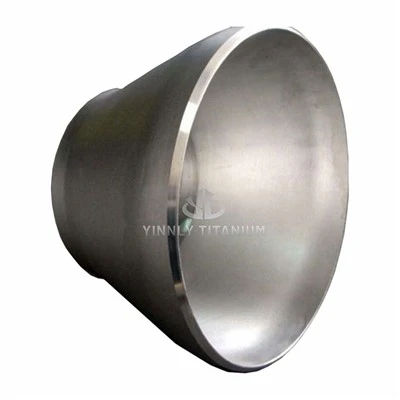
Titanium Reducer References
- International Titanium Association. (2022). Global Titanium Production and Environmental Footprint Report.
- Cambridge Process Ltd. (2021). Electrolytic Titanium Production: Life Cycle Analysis.
- World Gold Council. (2020). Titanium Mining and Land Reclamation Best Practices.
- U.S. Department of Energy. (2023). Lightweight Materials for Electric Vehicle Lifecycle Emissions Reduction.
- European Commission. (2022). Metal Recycling and Circular Economy in Industrial Supply Chains.
Baoji Yinnly Titanium Co., Ltd.
Baoji Yinnly Titanium Co., Ltd. is one of the most professional titanium disc manufacturers and suppliers in China, featured by quality products and good service. Please rest assured to buy bulk titanium disc in stock here and get quotation from our factory. Customized orders are welcome.
Address: Unit 902, Building 1, Creative Building, No. 195, Gaoxin Avenue, High-tech Zone, Baoji City, Shaanxi Province
E-mail: anna@yinnlyti.com
WebSite: https://www.yinnlyti.com/
