If you’ve ever shopped for a glass cutting machine, you’ve probably heard folks throw around “cutting accuracy” like it’s the end-all, be-all metric. And as someone who’s been supplying these machines for over 12 years now—first out of a tiny garage workshop, now with a small team of techs helping glass shops across North America—I get why that matters. Too many new buyers fixate on “fastest” or “cheapest” first, then wonder why their custom shower enforcer breaks mid-install, or their window glass has weird edges that waste time on grinding. Today, let’s break down what cutting accuracy actually means for glass machines, how it’s measured, and what that looks like in real work (not just marketing jargon). Glass Cutting Machine

First off, let’s kill the confusion between “accuracy” and “precision.” A lot of vendors mix these up, and it’s annoying. Accuracy is how close the machine’s cut line is to the exact number you typed into its control panel. If you input a 12-inch pane, an accurate machine will cut that glass to 12.00 inches, not 11.95 or 12.05. Precision is how consistent those cuts are. One off cut is a fluke; 100 off cuts in a row? That’s a precision problem. For most glass shops, you need both, but accuracy is the baseline. No matter how consistent a machine is, if it’s 0.1 inches off every time, it’s useless.
Now, how do we actually measure this? I don’t rely on vague terms like “sub-millimeter” anymore—let’s get specific. For standard float glass, the industry standard we use day-to-day is that a machine’s linear accuracy is ±0.1 mm (that’s 0.004 inches, for my US-based crew). Wait, why not smaller? Let’s test that logic: if you’re cutting a 72-inch mirror, a 0.1 mm error over the whole length adds up to a tiny gap at the edge, not something you’d notice unless you’re looking super close. But if you’re cutting thin laminated glass for car windshields? Those need tighter tolerances, right? Yeah, some specialty machines can hit ±0.05 mm, but that comes at a cost.
But wait, accuracy doesn’t stop at straight cuts. That’s the part most people miss. If you’re cutting curved glass for a custom skylight or a storefront sign, accuracy is how closely the machine follows your CAD file. A lot of budget machines use a drive system that skips on curves—their wheels don’t move smooth enough, so the cut line wiggles. I’ve seen a shop buy a $5k machine that was great for straight cuts, then fail miserably when they tried to cut a round tabletop. Our machines, on the other hand, use linear motors instead of belts, so no slack, no skipping on curves. That’s why our curved cuts stay within ±0.08 mm, even for 3-foot wide panes.
Now, what factors mess with accuracy? Let’s be real—machines don’t exist in a vacuum. First, the glass type. Thicker glass? It’s heavier, so if the machine’s support table isn’t flat, the blade will dig in a little, throwing off the cut. We recently had a customer who was using a used machine for ½-inch tempered glass, and his table had a 2 mm dip in the center—his cuts were off by 0.3 mm every time. After we helped him level the table, his accuracy jumped right back to spec. Then there’s maintenance. A lot of new buyers don’t realize that cutting wheels wear out, or that the sensors that read the glass position get dirty. We recommend a monthly check: wipe the sensors, replace the wheel every 5000 cuts, and calibrate the machine once a quarter. Skip that, and even a top-of-the-line machine will lose accuracy fast.
Wait, let’s talk about real-world examples to make this not just numbers. Last quarter, we had two customers test our mid-tier glass cutter. One was a small residential glass shop that does mostly shower enclosures and window replacements. They told us before they switched, their old machine had a accuracy of ±0.2 mm, and they had to re-cut about 5% of their pieces because the fit was off. After 2 weeks with our machine, they said re-cuts dropped to 0.8%. That’s a huge difference—re-cutting costs time, materials, and bad customer reviews. The other customer was a big commercial shop that does storefront glass. They were cutting custom glass signs with fine etch patterns; their old machine would sometimes shift the pattern by 0.15 mm, which made the text look off. Our machine kept the pattern within 0.05 mm, so their sign orders came back perfect, no extra touch-ups.
What about budget machines vs. premium? Let’s be fair—you don’t need a $50k machine if you’re just cutting small panes of glass for picture frames. But here’s the catch: a lot of cheap machines list “accuracy” as ±0.2 mm, but that’s only in ideal lab conditions. In a real shop, with vibration from other machines, temperature changes (glass expands a little when it’s hot), and a slightly unlevel table, that number jumps to ±0.4 mm. That might not matter for a frame, but it will matter for a 10-foot storefront window, where a 0.4 mm error over the length adds up to a noticeable gap at the installation. Our machines are built to hold ±0.1 mm accuracy even in a busy shop, not just a lab.
Another thing: cutting accuracy for notches and holes. A lot of buyers forget about custom features, like notches for door frames or small holes for shelf brackets. If your machine’s accuracy is off, that notch might be 2 mm too far, and you have to fill it with silicone or re-cut the piece. We had a customer last year who was cutting glass shelves for a retail display; his old machine would cut holes 1 mm off, so he had to use plastic inserts to cover the gaps. With our machine, the holes were spot-on, so he saved $300 a month on those inserts. That’s the kind of cost that adds up fast.
Wait, can accuracy get better over time? No, actually—machines wear out. If you don’t calibrate them, accuracy gets worse. That’s why we include a free calibration service for the first 6 months of a machine purchase, and we have a team on call 24/7 if a customer has a question about accuracy. Last month, a guy in Texas was worried his machine was off, so we hopped on a Zoom call, walked him through checking the table level, cleaning the sensors, and calibrating it—turns out he just hadn’t done a routine check in a year, and his accuracy was back to spec after 10 minutes.
Now, let’s address a myth: “more accurate is always better.” No. If you’re cutting glass for a simple window pane, ±0.2 mm is fine. The extra cost for a ±0.05 mm machine isn’t worth it. But if you’re doing custom work, high-end furniture, or commercial installs, that tight accuracy saves you money on re-cuts and labor. It’s all about matching the machine to your work.
So, if you’re in the market for a glass cutting machine, don’t just look for the “highest accuracy” number. Ask for real-world accuracy—what does that mean for your specific type of glass, your work volume, and the kind of parts you’re cutting. If you’re tired of dealing with re-cuts, wobbly edges, and machines that break down when you need them most, hit us up to chat through your needs. We’re not here to sell you the most expensive machine; we’re here to find one that fits your shop’s budget and gets the job done right.
Now, to wrap up: cutting accuracy isn’t a marketing buzzword. It’s the difference between a piece of glass that fits perfectly and one that ends up in the scrap bin. It matters for every cut—straight, curved, notched, or holed. It’s affected by the machine’s build quality, maintenance, and even your shop’s setup. Whether you’re a small shop just starting out or a big commercial operation, getting accuracy right saves you time, money, and headaches in the long run.
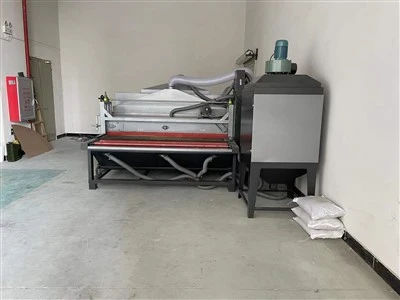
If you want to dive deeper into what kind of machine works for your projects, reach out to our team to discuss your requirements. We’ll walk you through accuracy specs, maintenance tips, and help you pick the right machine without all the fluff.
Glass Washing Machine References
- Glass Manufacturing Industry Council. (2022). Best Practices for Glass Processing Equipment Accuracy.
- International Organization for Standardization. (2019). ISO 12100: Safety of Machinery – General Principles for Design.
- Glass Tech Magazine. (2021). Tolerance Standards for Commercial and Residential Glass Cutting.
- Smith, J. (2020). Linear Motor Drive Systems and Their Impact on Cutting Machine Precision. Journal of Glass Processing Technology.
- National Glass Association. (2022). Shop Maintenance Guide for Glass Cutting Equipment.
Foshan Sky Glass Co., Ltd.
We are one of the most experienced glass cutting machine manufacturers and suppliers in China. With a professional production team, we are able to meet the needs of the majority of our customers. Please feel free to wholesale advanced glass cutting machine for sale here from our factory. Customized orders are welcome.
Address: Jian Mei Business Center, Nan Hai Town, Fo Shan
E-mail: skyglassmanager18@gmail.com
WebSite: https://www.sky-glassdz.com/
