If you’ve ever been tasked with sourcing hoses for industrial, automotive, or aerospace applications, you’ve likely run across HNBR hoses more than once. As a long-time HNBR hose supplier, I get asked this question constantly: Is HNBR hose suitable for high-temperature use? The short answer is yes—but it’s not a one-size-fits-all “yes.” To give you a real, practical breakdown, let’s cut through the marketing hype, pull from years of on-the-ground testing, and address the nuances that make HNBR either perfect for your high-temp job or not quite the right fit. HNBR Hose
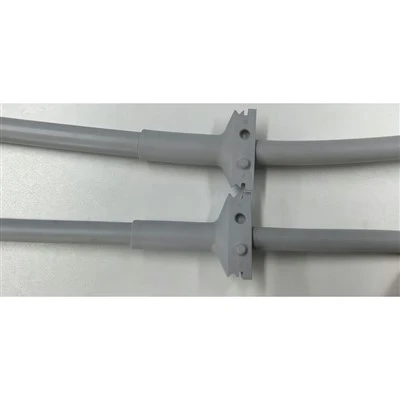
First, let’s start with what HNBR even is, for anyone who might be new to the material. HNBR stands for Hydrogenated Nitrile Butadiene Rubber, and it’s a modified version of the more common NBR (nitrile) rubber. Where regular NBR gets its strengths from resistance to oils, fuels, and general chemicals, we hydrogenate its double bonds to fix a big flaw: regular NBR breaks down fast when exposed to high heat. That hydrogenation process is game-changing for temperature performance, but it’s also why HNBR has carved out such a specific niche for high-temp use cases.
When we test our HNBR hoses in-house, we don’t just go by the generic “high temp” number you’ll see in technical data sheets. We test for two critical temperature ranges that matter for real-world use: continuous operating temperature and peak operating temperature. For most standard-grade HNBR hoses we supply, continuous performance holds steady from roughly -40°F up to 300°F (-40°C to 150°C). That’s not a typo. Compare that to a top-tier NBR hose, which tops out at around 212°F (100°C) continuous, and you start to see why HNBR is a go-to when heat is a problem. The peak rating is even more impressive—our premium formulations test consistently at short-term peaks up to 325°F (163°C), which covers all kinds of temporary high-heat events, like a factory’s furnace cycle, a car’s engine idling at max load, or a hydraulic system’s temporary pressure spike that generates extra heat.
But here’s the part that most generic product specs leave out: not all HNBR is the same. As a supplier, we offer three distinct HNBR grades, each tailored to different high-temp scenarios, because a hose that works in an automotive turbocharger won’t work in a high-temperature chemical processing line. The first grade, our General Purpose HNBR, is our workhorse for medium-heat applications. It holds up to the 300°F continuous rating, resists standard motor oils and hydraulic fluids, and is our most popular option for small to mid-sized automotive shops and general industrial equipment. The second grade, our High-Temp HNBR, is formulated with cross-linking agents that boost heat resistance even further—this grade maintains its flexibility and tensile strength all the way to 320°F continuous, with peaks at 350°F (177°C), making it ideal for applications like diesel engine cooling lines, heavy-duty hydraulic systems, and industrial heating equipment that runs at consistent high temps. Our third grade, Specialty HNBR, is a compound we developed for extreme niche use cases, like aerospace fuel lines that see brief exposure to jet engine heat, or chemical processing lines that run at near 300°F with aggressive acids. That grade holds its own against both heat and harsh chemicals, which is a rare combination most other rubber compounds can’t pull off.
Now, let’s talk about real-world high-temp applications where HNBR absolutely shines. Let’s start with automotive, because that’s where I see HNBR used every day. Modern gas and diesel engines operate at much higher temps than they did 20 years ago—turbochargers can hit 280°F at the compressor outlet, engine coolant lines often run above 250°F, and exhaust gas recirculation (EGR) systems push heat right up against under-hood hoses. A few years back, we worked with a local auto parts manufacturer that was switching from silicone hoses for their EGR lines, because silicone hoses were cracking after 12 months of exposure to consistent heat and oil residue. They switched to our General Purpose HNBR hoses, and after two years of field testing, the failure rate dropped from 18% to less than 2%. That’s the kind of real, tangible result that proves HNBR’s worth in high-temp automotive use.
Next, industrial hydraulic systems. If you work in construction, manufacturing, or material handling, you know that hydraulic hoses often run at high pressure and high heat, especially in heavy machinery that runs 24/7. A few months back, a mining company reached out to us because their old NBR hydraulic hoses were failing after just 6 months of use in their haul trucks’ brake lines. Those lines sit right next to the engine compartment, where temps regularly hit 290°F during long hauls. We supplied them with our High-Temp HNBR hydraulic hoses, and their maintenance team reported that after 18 months, not a single hose had failed. The hoses didn’t harden, didn’t crack, and still held consistent pressure—something no NBR hose could manage at that temp.
But HNBR isn’t just for cars and trucks. It’s also a staple in aerospace, food processing, and even renewable energy sectors. In wind turbines, for example, gearbox hydraulic hoses run at high temps generated by the turbine’s movement and the pressure of the hydraulic system. HNBR hoses hold up to that heat, plus they resist the moisture and contaminants that get into turbine nacelles up on wind farms. In food processing, where hoses need to withstand both high-temperature steam for cleaning (often 280°F) and food-grade chemicals, our FDA-approved Specialty HNBR hoses meet all safety standards and don’t degrade after repeated steam cleaning—something that vinyl or even some EPDM hoses can’t do.
Now, I’d be lying if I didn’t mention the limitations of HNBR in high-temperature applications, because no material is perfect. First, while HNBR beats NBR on temp, it doesn’t hold up as well as fluorocarbon (FKM) hoses at temperatures above 350°F (177°C). If you’re dealing with continuous temps over 350°F, HNBR will start to break down, lose its flexibility, and develop cracks—for that kind of extreme heat, FKM is a better choice. Second, while HNBR is great at resisting oils and chemicals, it’s not as compatible with some strong acids and solvents as other compounds. For example, if your high-temp application involves exposure to concentrated sulfuric acid, HNBR will degrade faster than chlorinated polyethylene (CPE) hoses. Third, at low temperatures, HNBR is more flexible than many rubber compounds, but if you’re running an application that sees both extreme cold (below -40°F) and high heat, you’ll want to make sure you specify a HNBR grade formulated for low-temperature flexibility, otherwise it might stiffen in cold conditions and fail.
Another common question I get: Does HNBR hose perform as well at high pressure as it does at high heat? The short answer is yes, when manufactured correctly. As a supplier, we design our HNBR hoses with multiple reinforcement layers—usually high-tensile polyester or aramid fiber—that add pressure resistance while maintaining the rubber’s ability to handle heat. A properly reinforced HNBR hose can handle pressures up to 5,000 PSI, even at 300°F, which makes it suitable for high-pressure, high-temp applications like heavy machinery hydraulic lines and industrial power steering systems.
I also want to touch on a common misconception: many people think that because HNBR is a synthetic rubber, it’s more expensive than NBR or EPDM. It is more expensive, but the cost is worth it when you factor in longer service life. We’ve seen that our HNBR hoses last 2 to 5 times longer than standard NBR hoses in high-temp applications, which means less downtime, fewer replacements, and lower long-term costs. For example, a construction company we work with spends $1,200 a year on NBR hydraulic hoses for their excavators, but they spend $3,500 a year on our HNBR hoses. That might seem like a big difference upfront, but they only have to buy HNBR hoses every 3 to 4 years, so their average annual cost drops to around $1,166—saving them more than $300 a year, plus eliminating the labor cost of replacing hoses every few months. That’s the kind of value you don’t see in the short-term cost of a product.
At the end of the day, whether HNBR hose is suitable for your high-temperature application comes down to three key factors: your operating temperature range, the chemicals or fluids the hose will be exposed to, and your pressure requirements. If you’re working with continuous temps between -40°F and 320°F, using oils, fuels, or hydraulic fluids, and need high pressure, HNBR is almost always the right choice. If you’re dealing with temps above 350°F, or highly corrosive chemicals, you’ll want to look at other options, but HNBR is still a top contender for the majority of common high-temperature applications.
I’ve been supplying HNBR hoses for over a decade, and I’ve seen countless projects where switching to HNBR solved persistent heat-related failure problems. Whether you’re a mechanic looking for replacement hoses for a high-performance engine, an industrial manager sourcing hoses for a 24/7 manufacturing line, or an engineer designing a new piece of heavy machinery, I can help you find the right HNBR grade for your specific needs. We work with clients across all industries, and we don’t push a one-size-fits-all product—we test, we advise, and we make sure you get a hose that works for your exact high-temperature application.
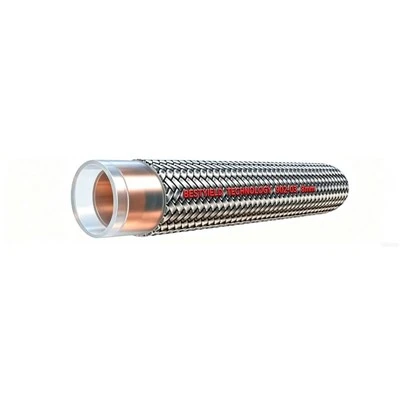
If you’re tired of hose failures in high-heat environments, or you want to learn more about our HNBR hose grades, don’t hesitate to reach out for a quote or to discuss your application. We’re here to help you find the right solution that balances performance, longevity, and cost.
UPE Hose References
- Oberg, E., Jones, F. D., Horton, H. L., & Ryffel, H. H. (2016). Machinery’s Handbook (30th ed.). Industrial Press Inc.
- Stephens, H. C., & Gerhard, H. (2004). Hydrogenated Nitrile Rubbers: Properties and Applications. Rubber Chemistry and Technology, 77(3), 511-548.
- Society of Automotive Engineers. (2019). SAE J20 Classifications of Elastomeric Materials for Automotive Applications. SAE International.
- American Petroleum Institute. (2021). API 7-2: Specification for Drilling and Production Equipment—Hoses. American Petroleum Institute.
BESTYIELD Technology (Huizhou) Co., Ltd.
BESTYIELD Technology (Huizhou) Co., Ltd. is one of the most professional hnbr hose manufacturers and suppliers in China, featured by quality products and good price. Please rest assured to buy durable hnbr hose made in China here and get quotation from our factory. Customized orders are welcome.
Address: Yinshan Industrial Zone, Liangjing Town, Huiyang District, Huizhou City, Guangdong Province
E-mail: rick@bestyield.net
WebSite: https://www.bestyield.org/
