Hey there, let’s cut to the chase – if you’re deep in the solar game (or just dipping your toes into setting up your first big PV system), you’ve probably heard the term “photovoltaic grid box” thrown around. Maybe you’re wondering, Is this just another fancy piece of solar jargon, or does it actually matter? Spoiler: it’s the unsung hero of your solar setup, the one that keeps the whole thing from turning into a mess when the grid flips on and off, or a stray cloud blocks the sun. And full disclosure? I’m the owner of a small, no-BS PV grid box supplier, so I’ve spent way too many late nights troubleshooting these things for installers and homeowners alike. Let me break this down like I would over a coffee (or a cold beer, if we’re being real) at a solar conference. Photovoltaic Grid Box
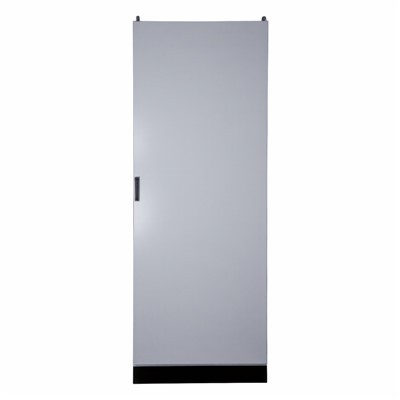
First, let’s get the basics straight, no textbook-level garbage. A photovoltaic grid box – sometimes people call it a grid-tie box, or grid interconnection box, or even just the PV interface box if they’re in a hurry – is a compact, wall-mounted (or sometimes rack-mounted) electrical unit that sits between your solar panels, your inverter, and the main utility grid. Wait, why not just wire everything straight? That’s the question I get asked most. Like, I had a guy from a rural farm call me last year, all proud because he wired his panels straight to his inverter and then to the grid. Told me his lights flickered every time the neighbor’s well kicked on, and once the grid went out, his inverter shut down completely – and he couldn’t figure out why. That’s where the grid box comes in. It’s the middleman that keeps all the parts talking to each other safely, without frying anything or causing a grid outage.
Let’s dive into what’s actually inside one of these things, because it’s not just a plastic box with some wires. You’ve got a few core components that do all the heavy lifting. First up: the overcurrent protection. That’s a fancy way of saying fuses or circuit breakers (we use DC breakers mostly for PV, since the power coming straight off the panels is DC, not the AC your house uses). If a panel gets hit by lightning, or a bird sits on the wires and causes a short, that breaker pops before it can turn your entire roof into a fire hazard. I can’t tell you how many times an installer has come to me saying their old box had a fuse that didn’t trip, and they had to replace a whole inverter – that’s the kind of mistake a good grid box prevents.
Next, there’s the surge protection device (SPD). Solar panels are outside, exposed to the elements – wind, rain, lightning, even static from those giant industrial fans we sometimes install on big commercial sites. If a lightning strike a mile away sends a power surge through the lines, the SPD in the grid box absorbs that extra voltage so it doesn’t blow your inverter or your house’s wiring. I once had a customer in Florida whose old box didn’t have a proper SPD – a summer storm took out his $12k inverter, and he had to wait three weeks for a replacement. Now he’s one of our regulars, and he never skips the SPD upgrade for his jobs.
Then there’s the interconnection relay or isolator switch. This is the part that makes the grid box “grid-tie” – it’s what connects your solar system to the utility grid, but only when it’s safe. If the grid goes down for whatever reason, that switch automatically flips, disconnecting your solar from the grid. Why? Because if your solar is still pumping power into a downed line, that’s super dangerous for utility workers trying to fix the outage. It’s called anti-islanding protection, and it’s non-negotiable – every grid-tie system in North America and Europe has to have this, no exceptions. That’s one of the first things I check when I’m talking to a new customer: do your grid boxes have UL 1741 certification (or VDE in Europe)? If not, it’s not up to code, and you could get fined.
Wait, hold on – there’s a difference between residential grid boxes and commercial ones, right? Yeah, totally. I make both, because I work with small local installers doing rooftop residential systems and big solar farms on industrial land. The residential ones are smaller – like, fits in a 12×18 inch box, easy to mount on the side of your house or a garage. They handle lower amperage, usually up to 100A, for systems that are 5kW to 20kW, which is enough for an average home in the US. Commercial grid boxes are way bigger – 24×30 inches or more, handle 400A or higher, for systems that are 50kW to multiple megawatts. Those often have extra features, like metering to track how much power you’re sending back to the grid, or communication ports so installers can monitor the system remotely. I had a customer who runs a 1MW solar farm in Texas – he told me his old boxes didn’t have remote monitoring, so he’d drive out at 7 a.m. every day just to check if the system was working. Now he uses my boxes, and he can pull up real-time data on his phone. Game changer.
A lot of people ask me: why not just build your own grid box? I get it – if you’re handy with electrical work, it’s tempting to buy the parts and put something together cheaper. But here’s the thing: electrical codes are not suggestions. I’ve seen homemade grid boxes that skipped the proper surge protection, or used the wrong gauge wiring, or didn’t have the anti-islanding relay. Those are fire hazards, plain and simple. Last year, a guy in Ohio built his own box, it shorted out, and his garage burned down. He had solar panels on the roof, so the fire spread fast. The insurance company didn’t cover it, because he didn’t use code-compliant equipment. That’s the risk. When you buy a grid box from a reputable supplier (like me), you’re getting a unit that’s been tested, certified, and built to meet all the national and local codes – so you don’t have to worry about that.
Another common question: how do I know if I need a new grid box? Let’s say you already have a solar system that’s 10 years old. A lot of the early grid boxes didn’t have the same features as the ones we make now – better surge protection, better anti-islanding, maybe space for extra components like a battery storage system. Oh, right! I should mention that a lot of new systems with battery storage also use grid boxes that can handle both solar and battery power. If you’re adding batteries to an existing system, you might need to upgrade your grid box to make it work with the battery inverter. I had a customer in California who added a Tesla Powerwall to his system, and his old grid box couldn’t connect to the battery. He tried to use an adapter, but it caused voltage spikes that made his fridge run weird. Swapped out the grid box, problem solved in 10 minutes. That’s the kind of issue we see all the time.
Wait, let’s talk about what makes a good grid box, not just a cheap one. For me, it’s all about quality parts. I don’t use no-name breakers from Amazon – I use Siemens or Schneider, same as the big guys. The wiring is 100% copper, not aluminum, because copper conducts better and doesn’t corrode as fast, especially in humid climates. And I build them to be modular, so if a part breaks, you don’t have to throw the whole box away – you can just replace the broken breaker or SPD. That saves installers and homeowners a ton of money in the long run. I also make sure all my boxes are weatherproof – IP65 rated, which means they can handle rain, snow, dust, even direct sunlight. No one wants a grid box that stops working because a few drops of water get inside.
Now, let’s get real about what I do as a supplier. I’m not a huge corporation that sells cheap boxes overseas. I’m a small business, based here in the US, and I work with installers all across North America. I don’t do bulk orders for Amazon or big box stores – I focus on custom and standard boxes for residential and commercial systems, and I offer tech support for anyone who buys from me. If an installer calls me at 8 p.m. on a Friday, panicking because they need a grid box for a job they’re doing on Saturday, I’ll ship it overnight. That’s the kind of service you don’t get from a big brand. I also test every single box that leaves my shop – I don’t send out duds. Once, I had a new hire miss a defect in one box, and a customer called me saying the breaker wouldn’t trip. I overnighted a replacement, picked up the bad box, and gave the customer a discount on the whole order. It’s not perfect, but I take responsibility, because that’s how you keep customers.
Let’s wrap this up. So to answer the original question: a photovoltaic grid box is the critical, code-compliant middleman that keeps your solar system safe, connected to the grid, and working properly. It’s not as flashy as the solar panels or the big inverter, but without it, your whole system is a ticking time bomb. Whether you’re a homeowner putting in a small rooftop system, or a developer building a big solar farm, investing in a good grid box isn’t a cost – it’s a long-term investment that saves you money, time, and stress.

If you’re working on a solar project right now, and you need reliable, code-compliant photovoltaic grid boxes that won’t cut corners on safety or performance, I’m here to help. We can work with you to size the right box for your system, whether it’s residential or commercial, and we offer flexible ordering and support to make sure your project stays on track. Don’t let a bad grid box ruin your solar setup – reach out and let’s chat about what you need.
GGD Cabinet References
- UL 1741 Standard for Inverters, Converters, Controllers and Interconnection System Equipment for Use With Distributed Energy Resources
- International Electrical Commission (IEC) 62116 Standard for Testing of Islanding Prevention Measures for Grid-Connected Photovoltaic Inverter Systems
- National Electrical Code (NEC) 690 Article for Solar Photovoltaic Systems, Including Grid Interconnection Requirements
- Solar Energy Industries Association (SEIA) Guide to Grid Interconnection Equipment for PV Systems
Shandong Qinghua Yike Electric Co., Ltd.
As one of the most experienced photovoltaic grid box manufacturers in China, we also support customized service. We warmly welcome you to buy durable photovoltaic grid box for sale here from our factory. If you have any enquiry about cooperation, please feel free to email us.
Address: No. 378 Taozhuang Village, Zaoyuan Town, Lanshan District, Linyi City, Shandong Province
E-mail: admin@sd-qhyk.com
WebSite: https://www.qhecobox.com/
